
A real phone box. Software that runs it.
The Call Beyond the Lamp Post is a physical escape room built around a real 1920s telephone box in our woods. The app we wrote sits behind it. It rings the Bakelite 1920s phone, voices the characters down the line, paces the puzzles and runs the clock. No games master. No staff in the wings. The room runs itself.


A 1920s telephone in the woods
Walk far enough into the Eastern Woods and you will come to a clearing with a black Victorian lamp post and an original phone box: cast iron, royal crown above the doors, painted post-office red. Inside it: a Bakelite handset and a metal directory.
This is the room. There are no padlocks bolted to plywood and no plastic props. Players step inside an actual telephone box and pick up an actual handset. The line on the other end is the part we wrote.
When a character is called, the Bakelite 1920s phone rings. Lift the receiver and the voice is live.
One tap and the room comes to life
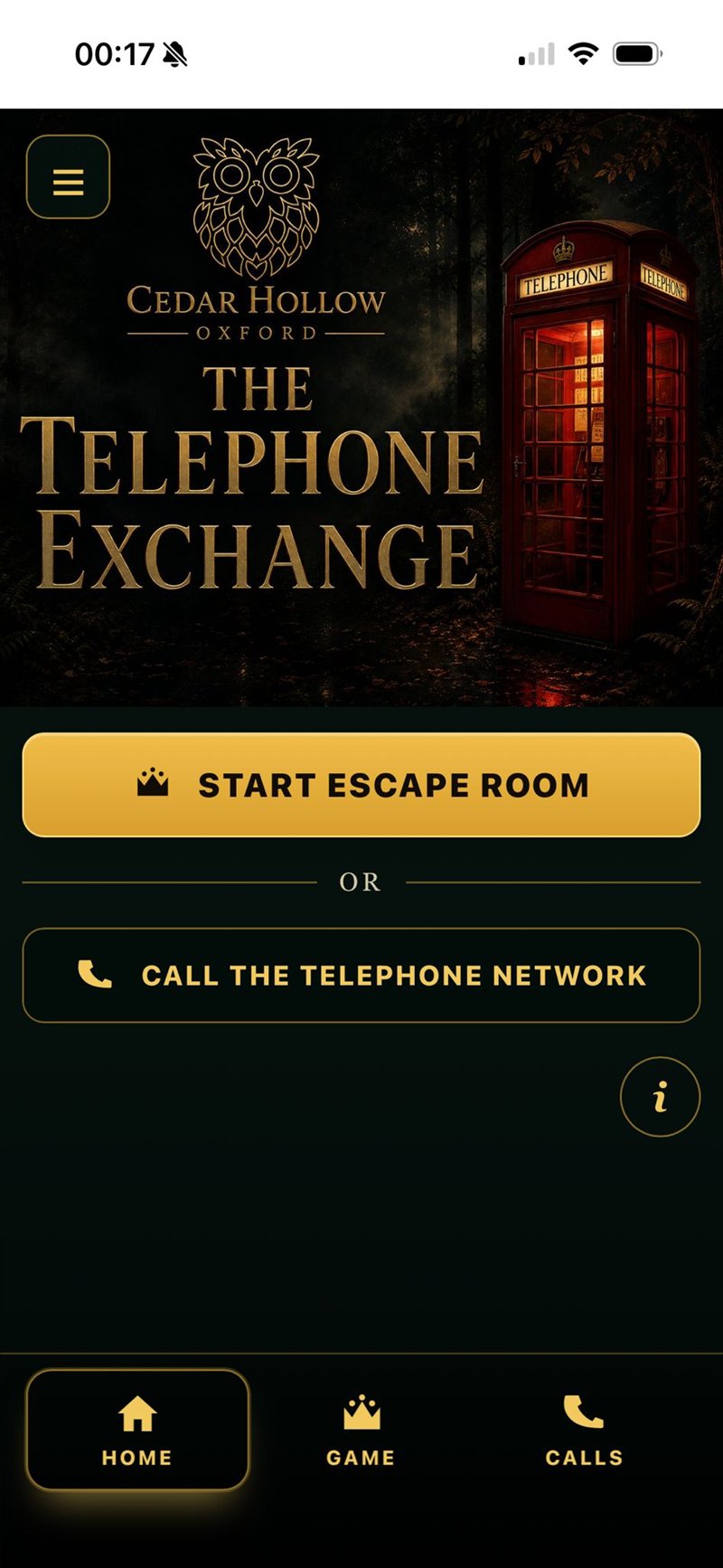
A guest taps Start Escape Room. The Bakelite 1920s phone rings. The Professor's voice begins on the line, and the room is in play. From that moment the entire experience runs from the device in their hand: cues, soundscapes, hints, the clock, and the calls back to the handset in the box.
The app handles the choreography that a games master would normally drive: pacing the opening narration, releasing puzzles at the right moments, escalating tension as time runs down, and softening the room with reassurance when a team gets stuck.
One device, no staff in the room, hundreds of moving parts on the inside.
An AI cast you can actually call
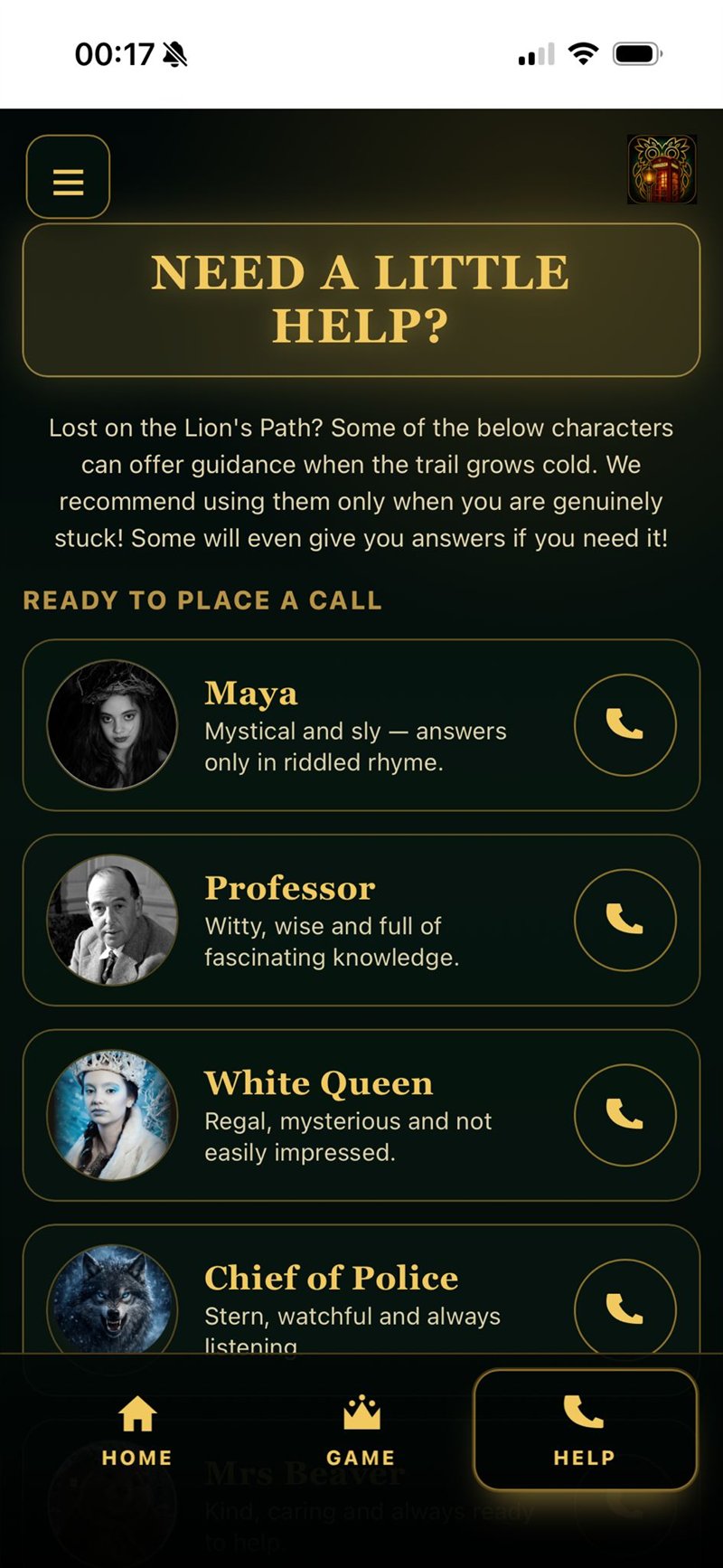
When a team gets stuck, they have two routes. Five numbered hints sit on the game screen for the brave, but the more interesting route is the phone. Each character lives behind a phone line, voiced in real time by language models we've tuned ourselves and given a script bible to live in.
Tap a character on the app and the Bakelite 1920s phone rings. You lift the handset, hold the receiver to your ear, and the voice on the other end is alive: speaking only to you, listening for whatever you ask, replying in character and in time.
Five characters wait on the line. Maya answers only in riddled rhyme. The Professor is witty, wise, and unfailingly fond of a tangent. The White Queen is regal, evasive, and difficult to please. The Chief of Police is stern, watchful, always listening. Mrs Beaver is gentle and patient when nothing else has worked.
None of them know they are characters in a puzzle. They know who they are. They know the world they live in. They know what they've seen. Players can talk to them about anything, and they'll respond as themselves, in their own voice. Press them for a hint, and you'll get one, framed in character. Press them harder, and you might get the answer.
Behind the curtain: prompt design, retrieval, in-character guardrails, voice synthesis routed back into the analog handset. Each character is its own small piece of software, and they all share the same source of truth about where the team is in the room.
Beautifully kept, quietly enforced
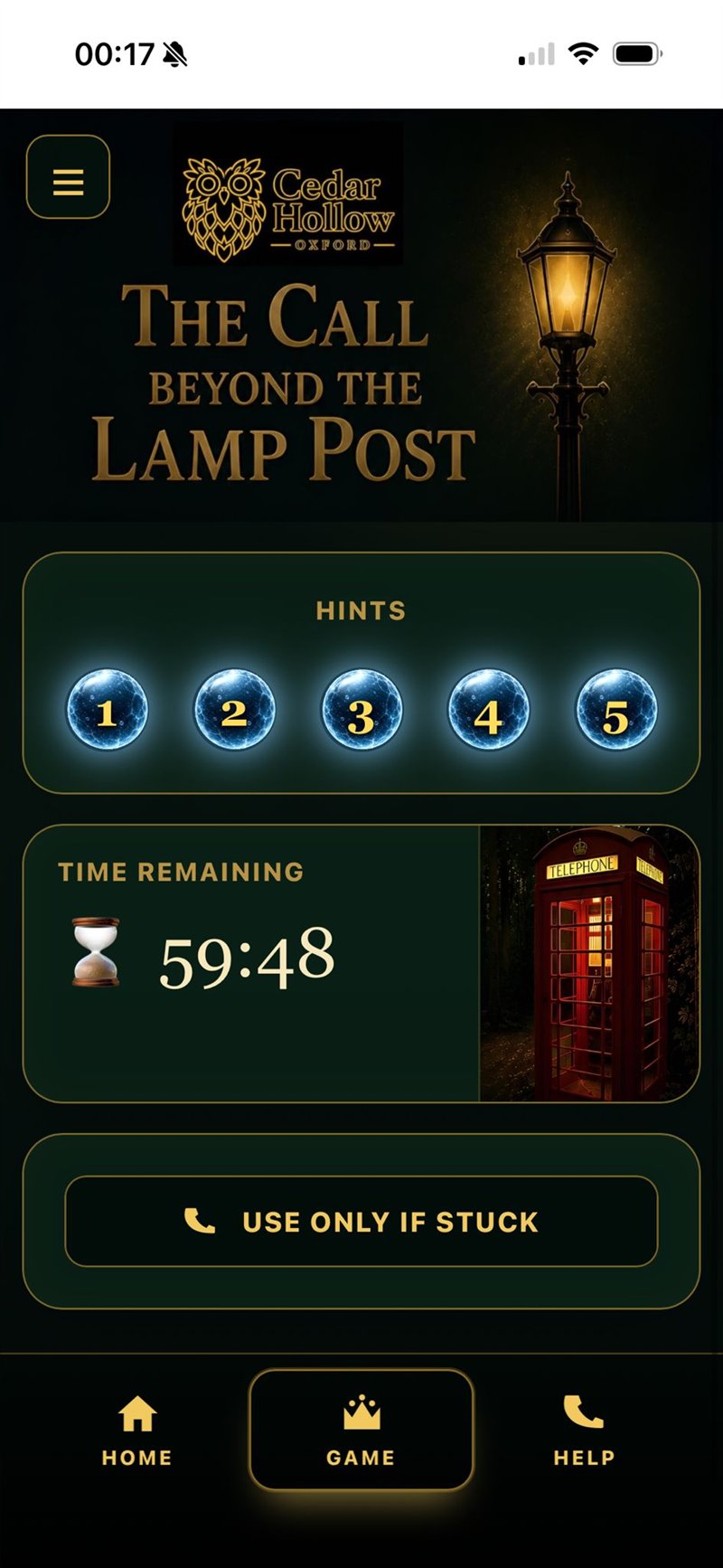
Five glowing hints. A countdown timer. A soft prompt that reads "use only if stuck". The game screen looks calm. Underneath, it's tracking which puzzles have been solved, which clues a team has actually noticed, how much time has elapsed in real terms versus their pace, and whether to nudge them or wait.
Every interaction (every hint taken, every character called) is written into state. If a team breaks for a coffee and returns, the room resumes exactly where it was. If they finish, the app records the run for the venue: time taken, hints used, characters called, paths chosen. The next team starts clean.
Built once. Plays itself again, and again, and again.
When the line breaks
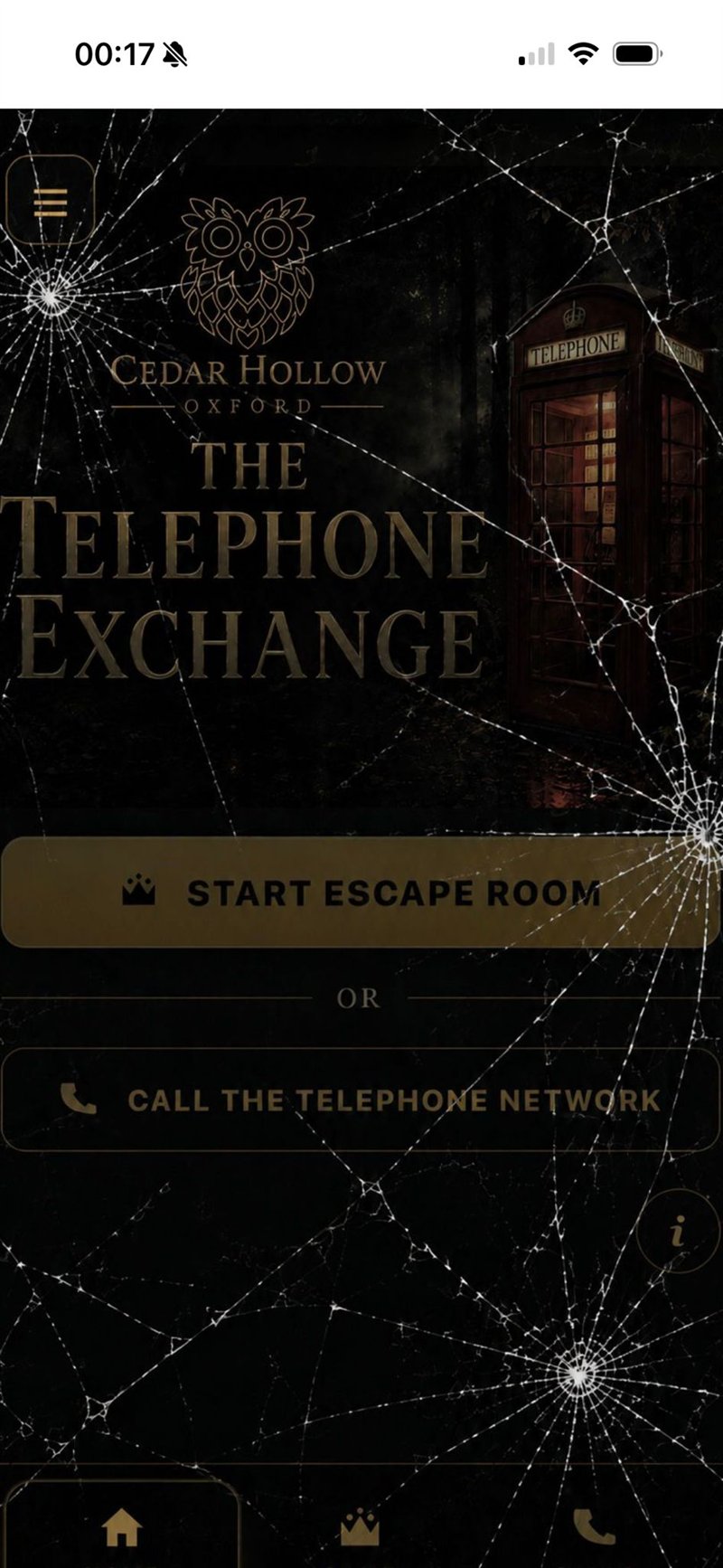
The room doesn't end quietly. As the team closes in on the final answer, the Queen's interference reaches its peak. Most of it happens in the room itself: lights inside the phone box flicker, the handset clicks and crackles, the speakers fall in and out of static, the phone hums when no one is calling. On the app, the screen judders in the player's hand and the glass appears to crack across.
The endgame sequence is its own little engine, half in the app, half in the room. Triggered hardware cues drive the box. Triggered animations drive the screen. Conditional dialogue from the characters runs over the top depending on how the team got there. A payoff that lands differently for a team that breezed through than for one that crawled to the line with three seconds to spare.
The same room ends nine different ways. The software remembers which.
We build this for venues
From the narrative scaffolding to the AI character voices, from the visual design to the live state machine, we build the entire stack in-house. If you run a venue, a hotel, a glamping site, a festival or a hospitality experience and you want a room that runs itself, we'd love to talk.